Synonyms: alpha-D-Glucopyranoside , Sucrose , D-(+)-Saccharose , D(+)-Saccharose , beta-D-Fructofuranosyl alpha-D-glucopyranoside , Sugar
Formula: C12H22O11
MW: 342.3 g/mol
Storage Temperature: Ambient
CAS Number: 57-50-1
EINECS: 200-334-9
Categories
Specification
Result
Appearance
White crystalline powder
Conform
Specific optical rotation
66.2° - 66.7°
Conform
Appearance of solution
Comply with the standard
Conform
Water Insoluble
≤0.002%
0.001%
Loss on drying
≤0.03%
0.02%
Residue on ignition
≤0.01%
0.007%
Acidity
≤0.08%
0.03%
Chloride
≤0.0005%
0.0003%
Sulphates
≤0.002%
0.001%
Iron
≤0.00001%
0.00002%
Heavy metals
≤0.0005%
0.00005%
Reducing sugar
Comply with the standard
Conform
Safety Data Sheet
MSDS
AR Grade- The standard Mallinckrodt grade of analytical reagents; suitable for laboratory and general use. Analytical Research Grade chemicals are a very high grade of chemical suitable for the specialist analytical testing carried out in laboratories where a high degree of accuracy is required.
Synonyms: alpha-D-Glucopyranoside , Sucrose , D-(+)-Saccharose , D(+)-Saccharose , beta-D-Fructofuranosyl alpha-D-glucopyranoside , Sugar
Formula: C12H22O11
MW: 342.3 g/mol
Storage Temperature: Ambient
CAS Number: 57-50-1
EINECS: 200-334-9
Categories
Specification
Result
Appearance
White crystalline powder
Conform
Specific optical rotation
66.2° - 66.7°
Conform
Appearance of solution
Comply with the standard
Conform
Water Insoluble
≤0.002%
0.001%
Loss on drying
≤0.03%
0.02%
Residue on ignition
≤0.01%
0.007%
Acidity
≤0.08%
0.03%
Chloride
≤0.0005%
0.0003%
Sulphates
≤0.002%
0.001%
Iron
≤0.00001%
0.00002%
Heavy metals
≤0.0005%
0.00005%
Reducing sugar
Comply with the standard
Conform
Safety Data Sheet
MSDS
AR Grade- The standard Mallinckrodt grade of analytical reagents; suitable for laboratory and general use. Analytical Research Grade chemicals are a very high grade of chemical suitable for the specialist analytical testing carried out in laboratories where a high degree of accuracy is required.
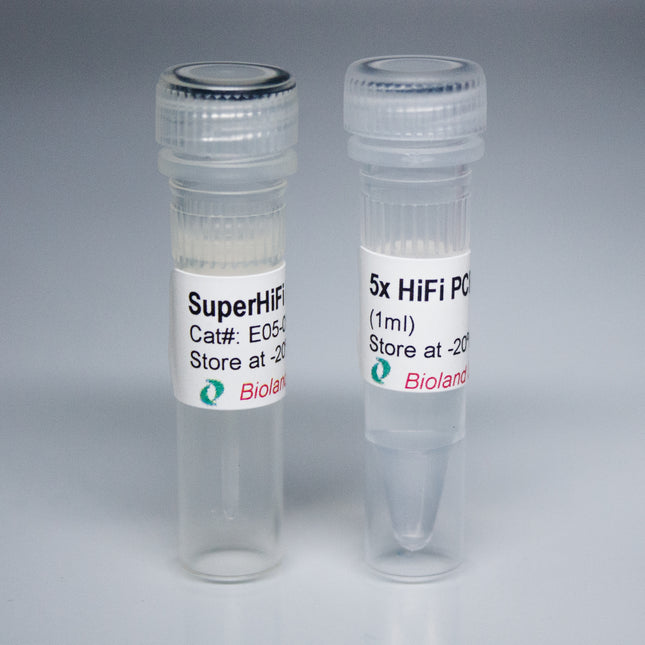
SuperHiFi™ High Fidelity DNA Polymerase Features
Exceptionally high fidelity – Over 50-fold better fidelity than Taq DNA Polymerase, eqivalent to Phusion polymerase
Extremely efficient – With extension speed of 3-4kb/min, significantly shorter extension time
Robust performance – Amplification of long templates (up to15 kb)
PCR products have blunt end
Description
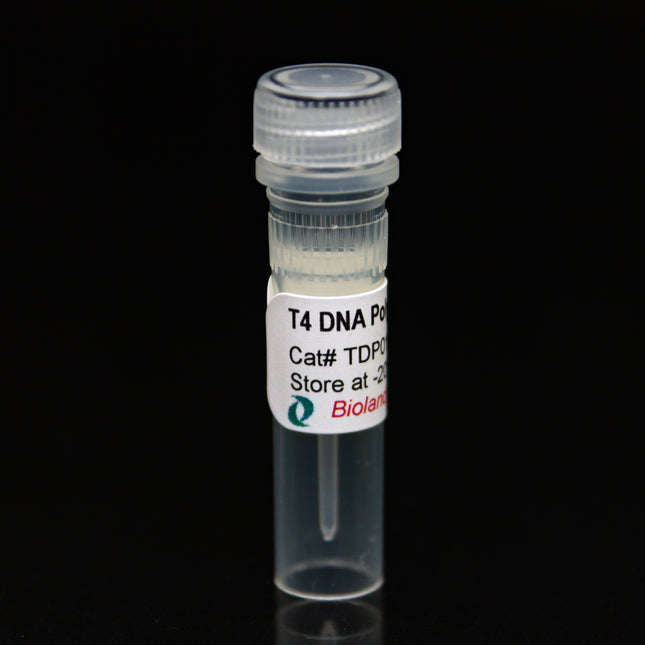
This product is expressed by Escherichia coli, and the source of the expressed gene is T4 bacteriophage. Due to the simultaneous activity of 5'→3' DNA polymerase and 3'→5' DNA exonuclease, T4 DNA polymerase can be used to flatten the 5' protruding end or flatten the 3' protruding end. It can also be used for labeling DNA probe synthesis through displacement reactions, analyzing the starting point of mRNA transcription through primer elongation, synthesizing the second strand during site-specific mutagenesis, and cloning PCR products that do not rely on linkage reactions.The 3'→5' DNA exonuclease activity of this T4 DNA polymerase is about 100-1000 times higher than Klenow Fragment, and it has higher activity for single stranded DNA than double stranded DNA. This enzyme does not contain exonuclease activity of 5'→3' DNA, and can be inactivated by heating at 70°C for 10 minutes. Metal ion chelating agents can inhibit its activity.
Unit definition
The amount of enzyme required to incorporate 10 nmol of whole nucleotides into acid insoluble precipitate is defined as 1 active unit (U) within 30 minutes, using thermally denatured calf thymus DNA as a template/primer, at 37°C and pH 8.8.
Quality control
2U of this enzyme reacted with 1μg of Closed Circular (RFI) pBR322 DNA at 37℃ for 16 hours, and the electrophoresis bands of the DNA remained unchanged.
Shipping and Storage
-20°C
Components
SKU
TDP01-01
TDP01-02
T4 DNA Polymerase (3U/μl)
50 μl
250 μl
10×T4 DNA Polymerase Reaction Buffer
1 ml
4x1 ml
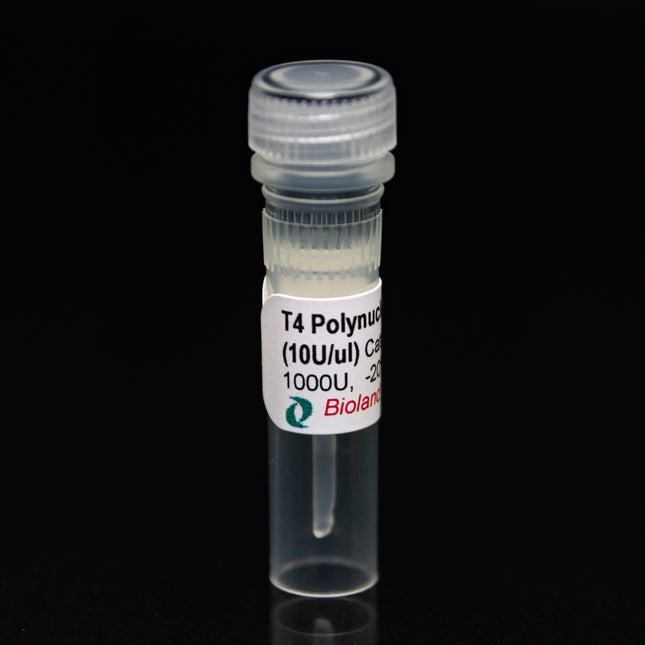
T4 Polynucleotide Kinase, abbreviated as T4 PNK, is expressed in Escherichia coli. The gene is derived from T4 bacteriophage and can catalyze the phosphorylation of ATP γ- The 5'-hydroxy terminus and 3'-monophosphate nucleosides of the nucleotide chain (double stranded or single stranded DNA or RNA). T4 PNK also possesses 3'-phosphatase activity, which hydrolyze the 3'-phosphate group from the 3'-phosphate terminus of the oligonucleotide, deoxygenated 3'-monophosphate nucleoside, and deoxygenated 3'-diphosphate nucleoside. The T4 PNK can be used for 5' end labeling or phosphorylation of oligonucleotides, DNA, or RNA; the phosphorylation of 5' single nucleotide or removal of the 3' terminal phosphate group. Heating this product at 75°C for 10 minutes or adding EDTA can inactivate it. Ion chelating agents, phosphates, ammonium ions, KCl ≥50 mM, and NaCl can significantly inhibit its activity.
Unit Definition
At 37°C, within 30 minutes, the amount of enzyme required for the transfer of 1 nmol of γ- Phosphate group on ATP to the end of 5′-OH on DNA is defined as 1 active unit.
Quality Control
After multiple column purification, the purity of SDS-PAGE was more than 99%; No contamination of endonuclease, exonuclease, phosphatase and RNase activities was detected.
Precautions
Because the ammonium salt can strongly inhibit the activity of T4 polynucleotide kinase, the DNA obtained from ammonium salt precipitation cannot be used for the labeling reaction of T4 polynucleotide kinase.
PEG can promote the rate and efficiency of phosphorylation reaction, and PEG should be added to the exchange reaction system.
When using, the enzyme should be stored in an ice box or on an ice bath, and should be stored at -20°C immediately after use.
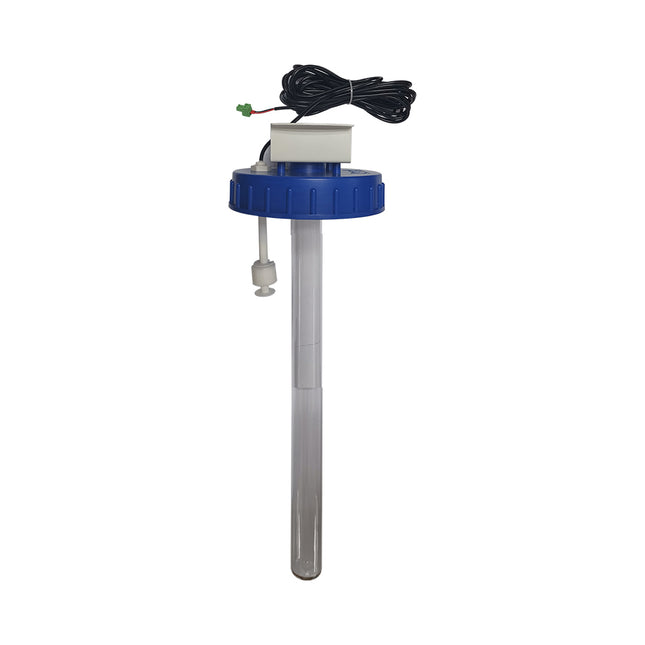
Tank Sanitization Module RAPRC0127 can effectively keep microbial growth at a lower level inside the tank by UV light.
Purification Technologies:
UV Light
Suitable for:
30/60/100 L Genie tank
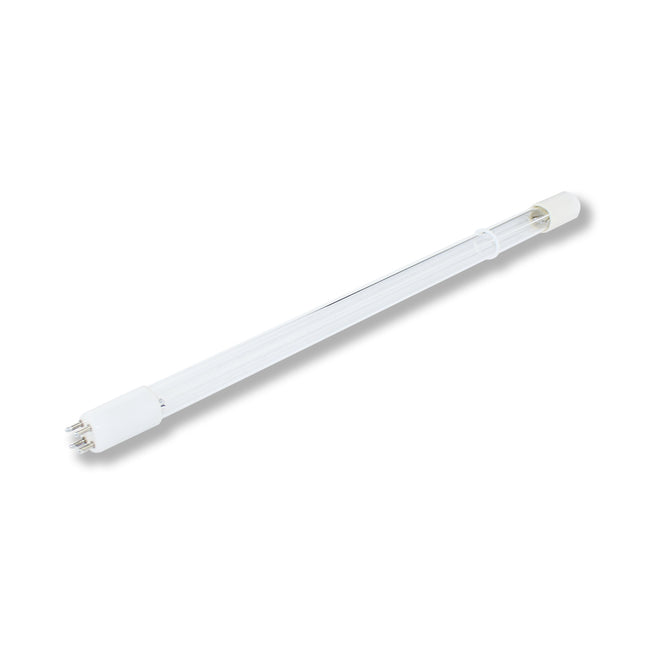
Tank UV Lamp for Genie, 254nm RAUV357A7 can effectively keep microbial growth at a lower level.
Purification Technologies:
Degerming for killing microorganisms
Suitable for:
30/60/100 L Genie tank
100/350 L Super-Genie tank
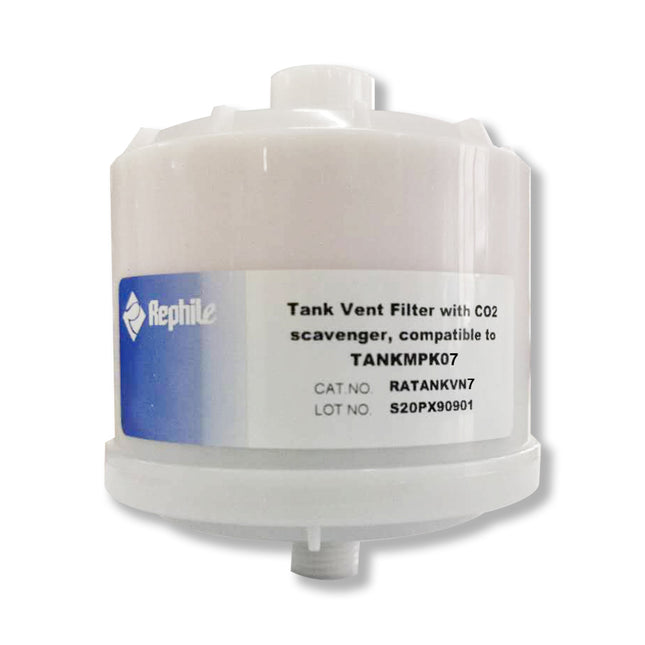
Tank Vent Filter with CO2 scavenger RATANKVN7 is designed to prevent airborne particles, CO2, organic and bacteria from entering the PE water tank. It contains a scavenger to remove CO2.
Purification Technologies:
Activated Carbon
Membrane Filtration
Chemistry Adsorption
Technical Specifications:
Height
393.8mm
Diameter
φ90mm
Suitable for:
30 / 60 / 100 L Genie tank
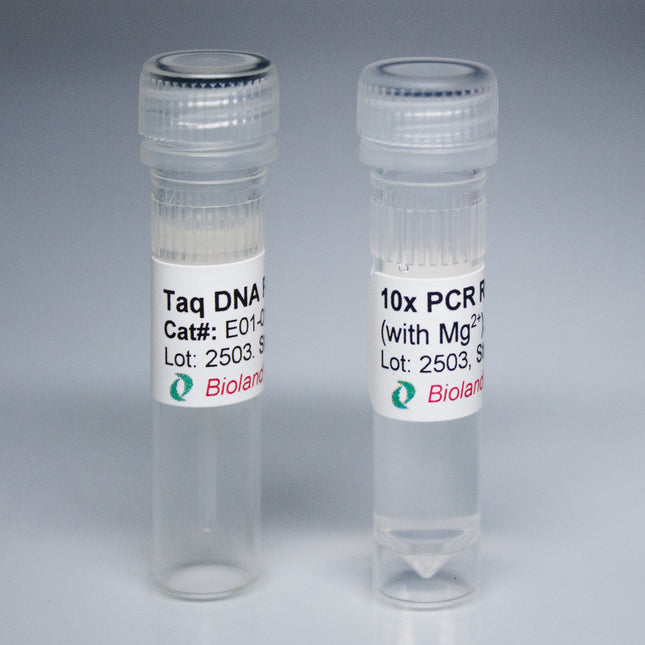
5 U/µl (1µl contains 5 units Taq DNA Polymerase)
Amplify DNA target up to 6 kb
Elongation velocity is 1kb/min
Lacks of 3' to 5' exoneclease activity
Makes 3'-dA overhangs PCR product, good for TA cloning
10x Reaction Buffer is included
A novel recombinant reverse transcriptase that exhibits much higher efficiency in the first-strand cDNA synthesis from RNA templates with secondary structures and high GC content. PowerScriptTM Plus Reverse Transcriptase is engineered to perform under high temperatures (50°C - 60°C), facilitating the elimination of secondary structures associated with GC-rich RNA templates. Due to this unique feature, ThermoScriptTM Plus can synthesize full-length cDNA libraries from RNA templates up to 12 kb in length.
Features
Lack RNase H activity: higher yield of cDNA.
Thermal stable: the optimum reaction temperature is 50°C, the highest is 60°C. Can overcome the template RNA secondary structure, and finish the reverse transcriptase experiment smoothly.
Wide temperature range: can reverse transcript from 37-60°C, with more than 80% of the highest activity at 42°C-60°C. customer can choose the reaction temperature freely.
Strong amplification activity: Gene mutation enhanced the binding capacity of the enzyme and RNA. Increased the amplification speed, can obtain the quality cDNA, suitable for cDNA library construction.
Applications
Synthesizing cDNA from a ssRNA
Constructing cDNA library
Source
Recombination of E. coli containing Moloney murine leukemia virus reverse transcriptase gene from clone of Moloney murine.
Unit definition
Using Poly (A) as the template and oligo (dT) as the primer, the enzyme required to catalyze the incorporation of 1 nmol of dTTP within 10 minutes at 37 oC is defined as one active unit (U).
Concentration: 200 U/ul
Size: 100 Reactions (125 ul)
Form: Enzyme supplied with 5X RT buffer
Storage: Store all components at -20°C
THM-INCU Microplate incubator is a microprocessor and PID controlled incubator with high performance. It accommodates up to two microplates. The incubator can be used for any enzyme or cell-based assays requiring uniform and strictly controlled temperature up to 70℃. It's compatible with coated plates (96-, 384-well plates) or tissue culture plates.
Features
Heated lid prevents condensation
Accepts a variety of microplates
Easy to operate with one touch knob
Specifications
Temperature Control Range
RT+5℃~70℃
Timing Range
1min~99h59min
Temperature Control Accuracy
≤±0.5℃
Display Accuracy
0.1℃
Heating Speed
≤25min
Capacity
2 microplate
Power
150-200w
Dimensions( Lx W x H)mm
280 x 270 x 140mm
Weight
7kg
THMS Heating Microplates Shaker applies the technologies of brushless DC motor and PID intelligent temperature controI. It's mainly used for assays using ELISA plates (96-, 384-wells), and tissue culture plates.
Features:
3mm Mixing orbit
Heated lid prevents condensation
Accepts a variety of microplates
Easy to operate with one touch knob
Specifications
Incubation
8℃~70℃
Display Accuracy
0.1℃ steps
Temperature stability
±0.3℃/ Temperature stability ±0.3℃
Warming Up Speed
<25min(form 20℃ to 70℃)
Shaking
1.5mm orbit radius
Shaking range form 200 to 1600rpm(increment:1rpm)
Timed shaking
range:0 to 99hours 59min in 1min steps
Continuous shaking - no time limit
Capacity
2 microplates
Power Requirements
110v, 60/50Hz,max.150VA
Dimensions
280 x 270 x 140mm