
Products
-
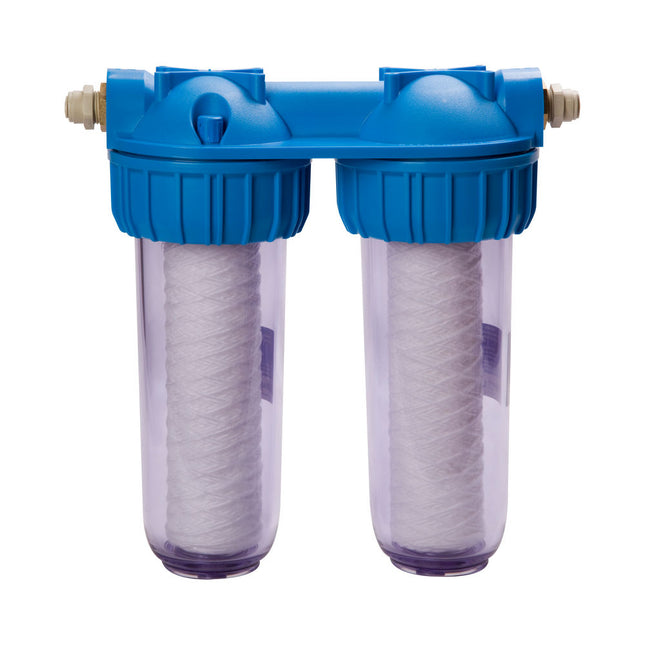
Prefiltration Kit (Two Stage)
SKU: RW10211KTThese products are designed to remove most of the particles, organic compounds and chlorine from tap water to protect RO membranes. Two choices of Prefilter are available for installation: Depth filter (either 10 micron or 1 micron) and Activated carbon filter. Purification Technology Activated Carbon Anti-Scaling Depth Filtration Suitable for the following Millipore systems Direct-Q Elix Milli-Q Direct Milli-Q Integral RiOs Any pure water systems with tap water inlet Disclaimer Third Parties: All product and company names are trademarks™ or registered® trademarks of their respective holders. Use of them does not imply any affiliation with or endorsement by them. All specifications are subject to change without notice. MILLIPORE, MILLI-Q, DIRECT-Q, SIMPLICITY, SYNERGY and ELIX are trademarks of Merck KGaA, Darmstadt Germany.
$150.00
-
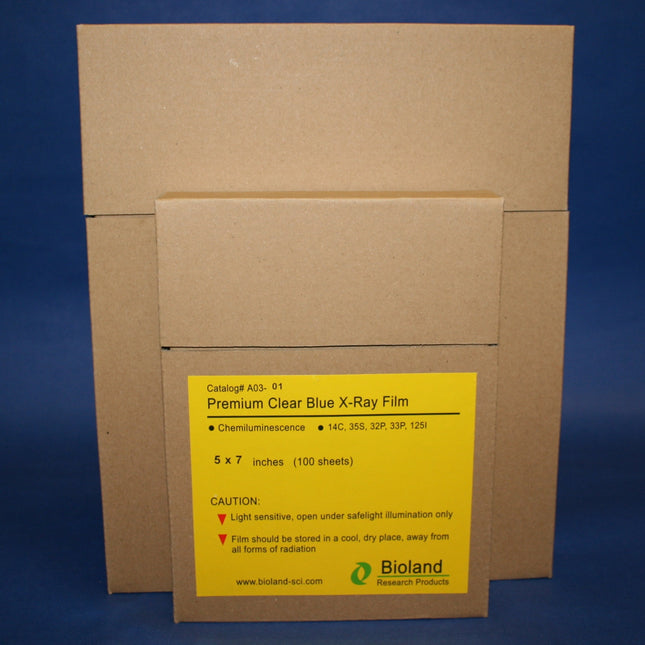
Premium Clear Blue X-ray Film, 5x7" (100 Count)
SKU: A03-01Fuji Film Exceptional film Clarity Extremely Low Backgrounds Consistently Superior Results for Chemiluminescence Excellent for Autoradiography of 14C, 35S, 32P, 33P, 125I No Obscure Signals from Samples Sharp and Clear Results Box After Box Manual or Automatic Development
$52.90
-
Premium Clear Blue X-ray Film, 8x10" (100 Count)
SKU: A03-02Exceptional film Clarity Extremely Low Backgrounds Consistently Superior Results for Chemiluminescence Excellent for Autoradiography of 14C, 35S, 32P, 33P, 125I No Obscure Signals from Samples Sharp and Clear Results Box After Box Manual or Automatic Development
$94.10
-
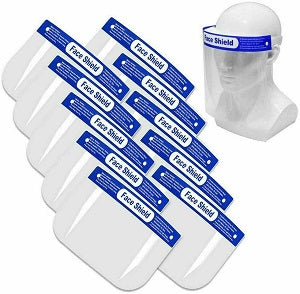
Protective Face Shield (10 Count)
SKU: FS10-10Specification: Condition: 100% Brand New Product Name: Protective Mask Shield Material: Plastic & Foam Color: Clear Size: 32cm * 22cm (L*W) / 12.60"in X 8.66"in Features: Fully transparent protective mask, anti-fog, anti-splash, isolation mask, full face protection. Effectively protects your entire face from viruses that may enter the eyes through flying dust and saliva. The protective mask uses a highly transparent and environmentally friendly substrate with high definition and is harmless to human health. Equipped with foam pads for comfort Suitable for various head shapes Package Includes: 10 Protective Face Shield (Instructions Included)
$29.40
-
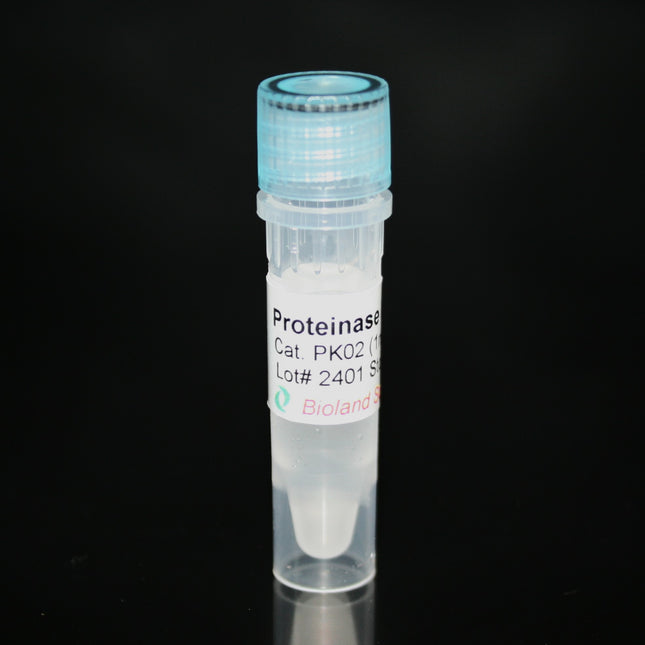
Proteinase K Solution (20mg/ml, 1ml)
SKU: PK02-1MLProteinase K is an endolytic protease that cleaves peptide bonds at the carboxylic sides of aliphatic, aromatic or hydrophobic amino acids. The Proteinase K is classified as a serine protease. The smallest peptide to be hydrolyzed by this enzyme is a tetrapeptide. Specific Activity: 40 U/mg protein Molecular Weight: 28.9 kDa monomer Source: Pichia pastoris cells with a cloned gene encoding Tritirachium album endolytic protease (Proteinase K). Applications Isolation of genomic DNA from cultured cells and tissues Removal of DNases and RNases when isolating DNA and RNA from tissues or cell lines Determination of enzyme localization Improving cloning efficiency of PCR products Quality Control DNase Activity: None detectable enzyme activity with λ DNA after 6 hrs incubation at 37ºC. RNase Activity: None detectable ribonuclease activity after 16 hrs incubation at 25ºC. Dilution Buffer 50 mM Tris-HCl (pH 7.5), containing 5 mM calcium chloride and 50% (v/v) glycerol. Definition of Activity Unit One unit of the enzyme liberates Folin-positive amino acids and peptides corresponding to 1 µmol tyrosine in 1 min at 37°C using denatured hemoglobin as substrate.Enzyme activity is assayed in the following mixture: 0.08 M potassium phosphate (pH 7.5), 5 M urea, 4 mM NaCl, 3 mM CaCl2 and 16.7 mg/ml hemoglobin. Storage For long time storage, store the Proteinase K powder at 4ºC and solution at -20°C. Inhibition and Inactivation Inhibitors: Proteinase K is not inactivated by metal chelators, by thiol-reactive reagents or by specific trypsin and chymotrypsin inhibitors. Phenylmethylsulfonyl fluoride and diisopropyl phosphorofluoridate completely inhibit the enzyme. Inactivated by heating at 95°C for 10 minutes. Other Note: Optimum activity at 50-55°C. Rapid denaturation of enzyme occurs at temperatures above 65°C. The recommended working concentration for Proteinase K is 0.05-1 mg/ml. The activity of the enzyme is stimulated by 0.2-1% SDS or by 1-4 M urea. Ca2+ protects Proteinase K against autolysis, increases the thermal stability and has a regulatory function for the substrate binding site of Proteinase K. Stable over a wide pH range: 4.0-12.5, optimum pH 7.5-8.0.
$31.80
-
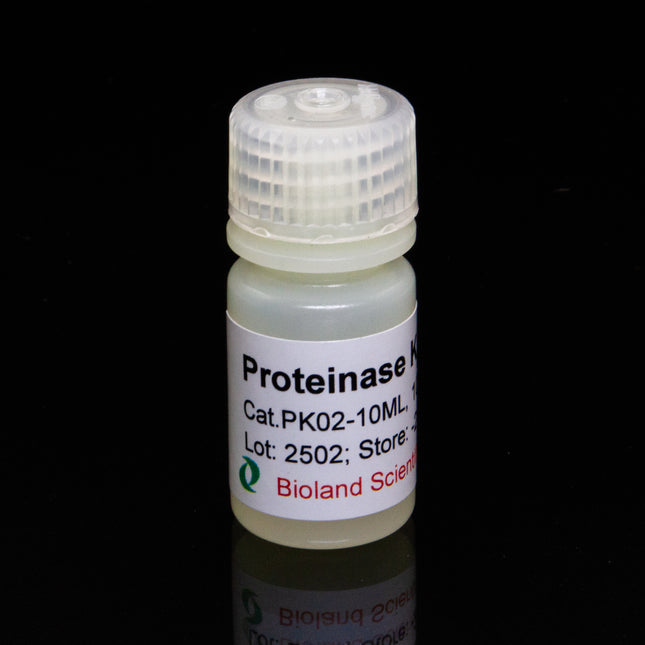
Proteinase K Solution, 20mg/ml (10 ml)
SKU: PK02-10MLProteinase K is an endolytic protease that cleaves peptide bonds at the carboxylic sides of aliphatic, aromatic or hydrophobic amino acids. The Proteinase K is classified as a serine protease. The smallest peptide to be hydrolyzed by this enzyme is a tetrapeptide. Specific Activity: 40 U/mg protein Molecular Weight: 28.9 kDa monomer Source: Pichia pastoris cells with a cloned gene encoding Tritirachium album endolytic protease (Proteinase K). Applications Isolation of genomic DNA from cultured cells and tissues Removal of DNases and RNases when isolating DNA and RNA from tissues or cell lines Determination of enzyme localization Improving cloning efficiency of PCR products Quality Control DNase Activity: None detectable enzyme activity with λ DNA after 6 hrs incubation at 37ºC. RNase Activity: None detectable ribonuclease activity after 16 hrs incubation at 25ºC. Dilution Buffer 50 mM Tris-HCl (pH 7.5), containing 5 mM calcium chloride and 50% (v/v) glycerol. Definition of Activity Unit One unit of the enzyme liberates Folin-positive amino acids and peptides corresponding to 1 µmol tyrosine in 1 min at 37°C using denatured hemoglobin as substrate.Enzyme activity is assayed in the following mixture: 0.08 M potassium phosphate (pH 7.5), 5 M urea, 4 mM NaCl, 3 mM CaCl2 and 16.7 mg/ml hemoglobin. Storage For long time storage, store the Proteinase K powder at 4ºC and solution at -20°C. Inhibition and Inactivation Inhibitors: Proteinase K is not inactivated by metal chelators, by thiol-reactive reagents or by specific trypsin and chymotrypsin inhibitors. Phenylmethylsulfonyl fluoride and diisopropyl phosphorofluoridate completely inhibit the enzyme. Inactivated by heating at 95°C for 10 minutes. Other Note: Optimum activity at 50-55°C. Rapid denaturation of enzyme occurs at temperatures above 65°C. The recommended working concentration for Proteinase K is 0.05-1 mg/ml. The activity of the enzyme is stimulated by 0.2-1% SDS or by 1-4 M urea. Ca2+ protects Proteinase K against autolysis, increases the thermal stability and has a regulatory function for the substrate binding site of Proteinase K. Stable over a wide pH range: 4.0-12.5, optimum pH 7.5-8.0.
$188.20
-
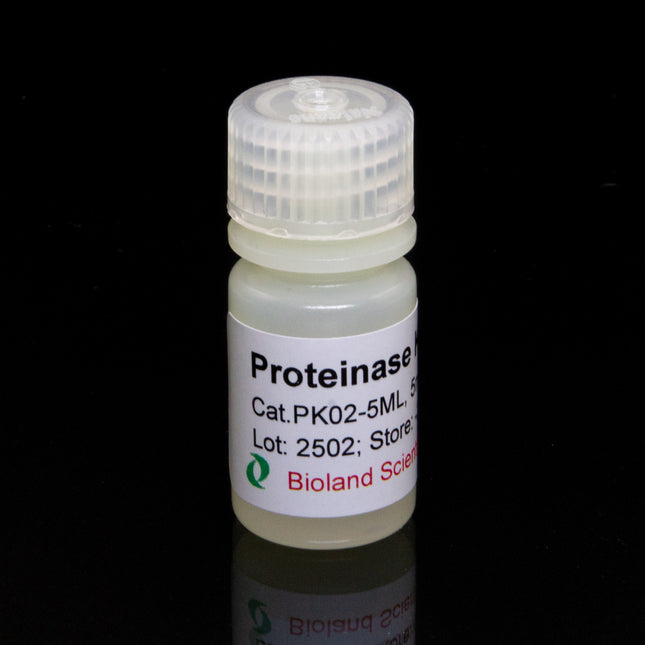
Proteinase K Solution, 20mg/ml (5 ml)
SKU: PK02-5MLProteinase K is an endolytic protease that cleaves peptide bonds at the carboxylic sides of aliphatic, aromatic or hydrophobic amino acids. The Proteinase K is classified as a serine protease. The smallest peptide to be hydrolyzed by this enzyme is a tetrapeptide. Specific Activity: 40 U/mg protein Molecular Weight: 28.9 kDa monomer Source: Pichia pastoris cells with a cloned gene encoding Tritirachium album endolytic protease (Proteinase K). Applications Isolation of genomic DNA from cultured cells and tissues Removal of DNases and RNases when isolating DNA and RNA from tissues or cell lines Determination of enzyme localization Improving cloning efficiency of PCR products Quality Control DNase Activity: None detectable enzyme activity with λ DNA after 6 hrs incubation at 37ºC. RNase Activity: None detectable ribonuclease activity after 16 hrs incubation at 25ºC. Dilution Buffer 50 mM Tris-HCl (pH 7.5), containing 5 mM calcium chloride and 50% (v/v) glycerol. Definition of Activity Unit One unit of the enzyme liberates Folin-positive amino acids and peptides corresponding to 1 µmol tyrosine in 1 min at 37°C using denatured hemoglobin as substrate.Enzyme activity is assayed in the following mixture: 0.08 M potassium phosphate (pH 7.5), 5 M urea, 4 mM NaCl, 3 mM CaCl2 and 16.7 mg/ml hemoglobin. Storage For long time storage, store the Proteinase K powder at 4ºC and solution at -20°C. Inhibition and Inactivation Inhibitors: Proteinase K is not inactivated by metal chelators, by thiol-reactive reagents or by specific trypsin and chymotrypsin inhibitors. Phenylmethylsulfonyl fluoride and diisopropyl phosphorofluoridate completely inhibit the enzyme. Inactivated by heating at 95°C for 10 minutes. Other Note: Optimum activity at 50-55°C. Rapid denaturation of enzyme occurs at temperatures above 65°C. The recommended working concentration for Proteinase K is 0.05-1 mg/ml. The activity of the enzyme is stimulated by 0.2-1% SDS or by 1-4 M urea. Ca2+ protects Proteinase K against autolysis, increases the thermal stability and has a regulatory function for the substrate binding site of Proteinase K. Stable over a wide pH range: 4.0-12.5, optimum pH 7.5-8.0.
$100.00
-
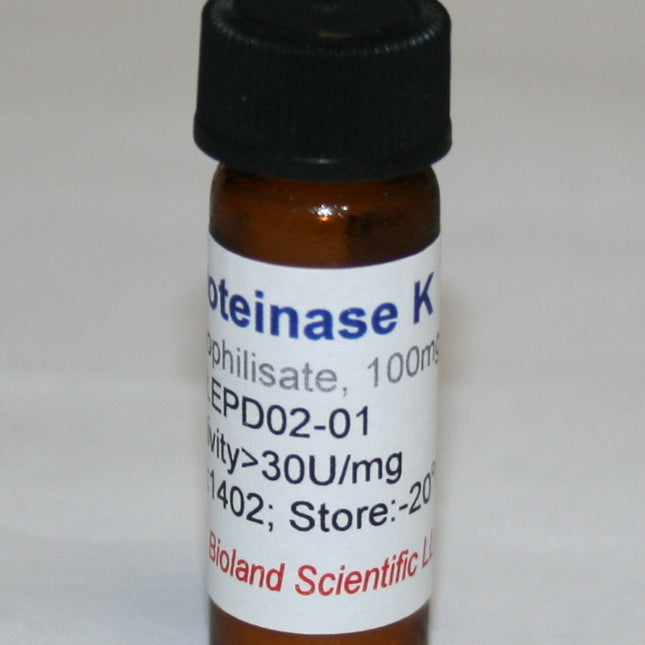
Proteinase K, Lyophilisate (1 g)
SKU: PK01-1GProteinase K is an endolytic protease that cleaves peptide bonds at the carboxylic sides of aliphatic, aromatic or hydrophobic amino acids. The Proteinase K is classified as a serine protease. The smallest peptide to be hydrolyzed by this enzyme is a tetrapeptide. Specific Activity: 40 U/mg protein Molecular Weight: 28.9 kDa monomer Source: Pichia pastoris cells with a cloned gene encoding Tritirachium album endolytic protease (Proteinase K). Applications Isolation of genomic DNA from cultured cells and tissues Removal of DNases and RNases when isolating DNA and RNA from tissues or cell lines Determination of enzyme localization Improving cloning efficiency of PCR products Quality Control DNase Activity: None detectable enzyme activity with λ DNA after 6 hrs incubation at 37°C. RNase Activity: None detectable ribonuclease activity after 16 hrs incubation at 25°C. Dilution Buffer 50 mM Tris-HCl (pH 7.5), containing 5 mM calcium chloride and 50% (v/v) glycerol. Definition of Activity Unit One unit of the enzyme liberates Folin-positive amino acids and peptides corresponding to 1 µmol tyrosine in 1 min at 37°C using denatured hemoglobin as substrate.Enzyme activity is assayed in the following mixture: 0.08 M potassium phosphate (pH 7.5), 5 M urea, 4 mM NaCl, 3 mM CaCl2 and 16.7 mg/ml hemoglobin. Storage For long time storage, store the Proteinase K powder at 4ºC and solution at -20°C. Inhibition and Inactivation Inhibitors: Proteinase K is not inactivated by metal chelators, by thiol-reactive reagents or by specific trypsin and chymotrypsin inhibitors. Phenylmethylsulfonyl fluoride and diisopropyl phosphorofluoridate completely inhibit the enzyme. Inactivated by heating at 95°C for 10 minutes. Other Note: Optimum activity at 50-55°C. Rapid denaturation of enzyme occurs at temperatures above 65°C. The recommended working concentration for Proteinase K is 0.05-1 mg/ml. The activity of the enzyme is stimulated by 0.2-1% SDS or by 1-4 M urea. Ca2+ protects Proteinase K against autolysis, increases the thermal stability and has a regulatory function for the substrate binding site of Proteinase K. Stable over a wide pH range: 4.0-12.5, optimum pH 7.5-8.0.
$411.80
-
Proteinase K, Lyophilisate (100 mg)
SKU: PK01-100MGProteinase K is an endolytic protease that cleaves peptide bonds at the carboxylic sides of aliphatic, aromatic or hydrophobic amino acids. The Proteinase K is classified as a serine protease. The smallest peptide to be hydrolyzed by this enzyme is a tetrapeptide. Specific Activity: 40 U/mg protein Molecular Weight: 28.9 kDa monomer Source: Pichia pastoris cells with a cloned gene encoding Tritirachium album endolytic protease (Proteinase K). Applications Isolation of genomic DNA from cultured cells and tissues Removal of DNases and RNases when isolating DNA and RNA from tissues or cell lines Determination of enzyme localization Improving cloning efficiency of PCR products Quality Control DNase Activity: None detectable enzyme activity with λ DNA after 6 hrs incubation at 37°C. RNase Activity: None detectable ribonuclease activity after 16 hrs incubation at 25°C. Dilution Buffer 50 mM Tris-HCl (pH 7.5), containing 5 mM calcium chloride and 50% (v/v) glycerol. Definition of Activity Unit One unit of the enzyme liberates Folin-positive amino acids and peptides corresponding to 1 µmol tyrosine in 1 min at 37°C using denatured hemoglobin as substrate.Enzyme activity is assayed in the following mixture: 0.08 M potassium phosphate (pH 7.5), 5 M urea, 4 mM NaCl, 3 mM CaCl2 and 16.7 mg/ml hemoglobin. Storage For long time storage, store the Proteinase K powder at 4ºC and solution at -20°C. Inhibition and Inactivation Inhibitors: Proteinase K is not inactivated by metal chelators, by thiol-reactive reagents or by specific trypsin and chymotrypsin inhibitors. Phenylmethylsulfonyl fluoride and diisopropyl phosphorofluoridate completely inhibit the enzyme. Inactivated by heating at 95°C for 10 minutes. Other Note: Optimum activity at 50-55°C. Rapid denaturation of enzyme occurs at temperatures above 65°C. The recommended working concentration for Proteinase K is 0.05-1 mg/ml. The activity of the enzyme is stimulated by 0.2-1% SDS or by 1-4 M urea. Ca2+ protects Proteinase K against autolysis, increases the thermal stability and has a regulatory function for the substrate binding site of Proteinase K. Stable over a wide pH range: 4.0-12.5, optimum pH 7.5-8.0.
$58.80
-
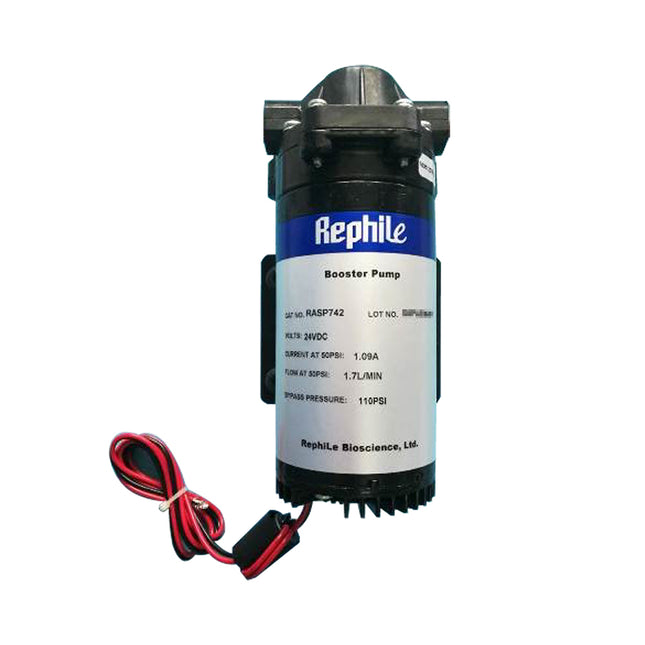
Recirculation pump, 24VDC (1 Count)
SKU: RASP743Distribution Pump, 24VDC is used to allow water dispensing and recirculation. Specifications Operating voltage 24 VDC ± 5% Input pressure 0.2 – 6.0 bar Output pressure 4.0 – 6.5 bar Operating temperature < 60 °C Fitting Inlet and outlet are 8 mm quick connectors Suitable Genie water systems: Genie G Genie U Genie A Genie E Genie R Genie PURIST
$570.00
-
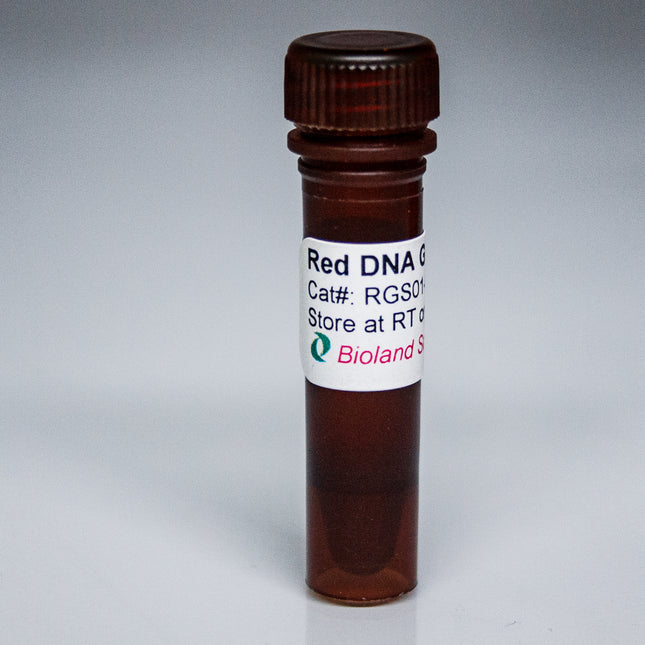
Red DNA Gel Stain (10,000x, 1.0 ml) For UV Light
SKU: RGS01-01Red DNA Gel Stain is a new and safe class fluorescent dye, used for agarose gel or polyacrylamide gel staining to visualize DNA or RNA. It is a safe replacement of Ethidium Bromide, a potent mutagen. Red DNA Gel Stain showed negative results in Ames test, indicating that it's not carcinogenic. Red DNA Gel Stain is used the same way as Ethidium Bromide. It emits Red fluorescence when bound to DNA under UV light. It has the excitation maxima: 450nm. Protocol Prepare a 50 ml agarose or polyacrylamide solution. Add 5 ul Safe DNA Gel Stain to the gel solution. Mix gently; the solution should have no air bubbles. For agarose gel, let the solution cool down to 60 - 70oC and cast the gel. For polyacrylamide gel, add APS and TEMED and cast the gel according to regular polyacrylamide gel casting protocol. Run gel electrophoresis. View the results under UV light.
$88.20
-
Red DNA Gel Stain (10,000x, 5x1ml) For UV Light
SKU: RGS01-02Red DNA Gel Stain is a new and safe class fluorescent dye, used for agarose gel or polyacrylamide gel staining to visualize DNA or RNA. It is a safe replacement of Ethidium Bromide, a potent mutagen. Red DNA Gel Stain showed negative results in Ames test, indicating that it's not carcinogenic. Red DNA Gel Stain is used the same way as Ethidium Bromide. It emits Red fluorescence when bound to DNA under UV light. It has the excitation maxima: 450nm. Protocol Prepare a 50 ml agarose or polyacrylamide solution. Add 5 ul Safe DNA Gel Stain to the gel solution. Mix gently; the solution should have no air bubbles. For agarose gel, let the solution cool down to 60 - 70oC and cast the gel. For polyacrylamide gel, add APS and TEMED and cast the gel according to regular polyacrylamide gel casting protocol. Run gel electrophoresis. View the results under UV light.
$397.10
