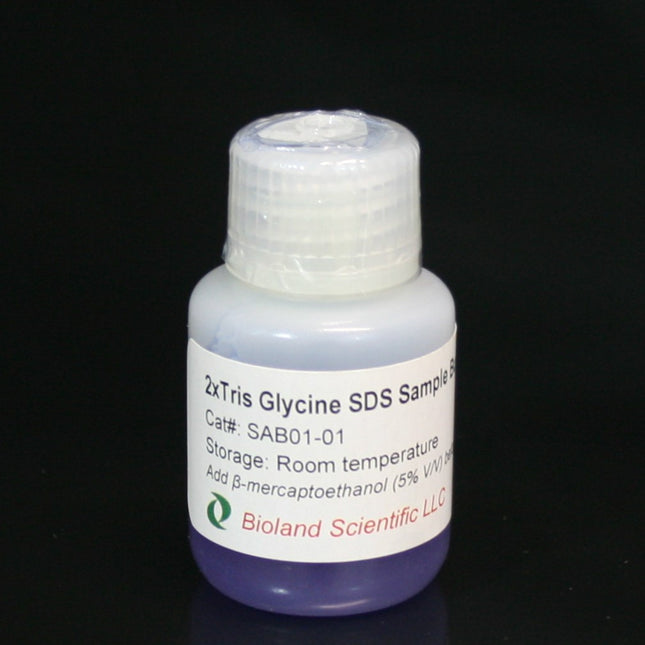
Tris-Glycine SDS Sample Buffer (2X) is used to prepare protein samples for denaturing gel electrophoresis using Tris-Glycine gels. It has a pH of 6.8 and contains bromophenol blue as a tracking dye.
To use: Heat the sample in a 1X dilution (reduced or non-reduced) at 85°C for 2–5 minutes for optimal results.
Note: Heating samples at 100°C in SDS-containing buffers results in proteolysis.
Composition: 125 mM Tris HCl, 4% SDS, 20% Glycerol, 0.01% Bromophenol blue (Non-reduced). Add ß-mercaptoethanol (8% V/V) before use (Reduced).
MSDS
Tris-Glycine SDS Sample Buffer (2X) is used to prepare protein samples for denaturing gel electrophoresis using Tris-Glycine gels. It has a pH of 6.8 and contains bromophenol blue as a tracking dye.
To use: Heat the sample in a 1X dilution (reduced or non-reduced) at 85°C for 2–5 minutes for optimal results.
Note: Heating samples at 100°C in SDS-containing buffers results in proteolysis.
Composition: 125 mM Tris HCl, 4% SDS, 20% Glycerol, 0.01% Bromophenol blue (Non-reduced). Add ß-mercaptoethanol (8% V/V) before use (Reduced).
MSDS
Features
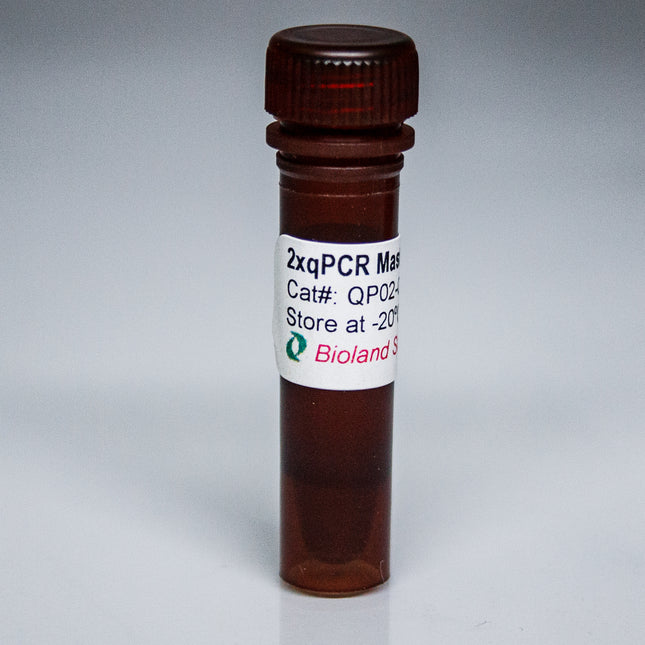
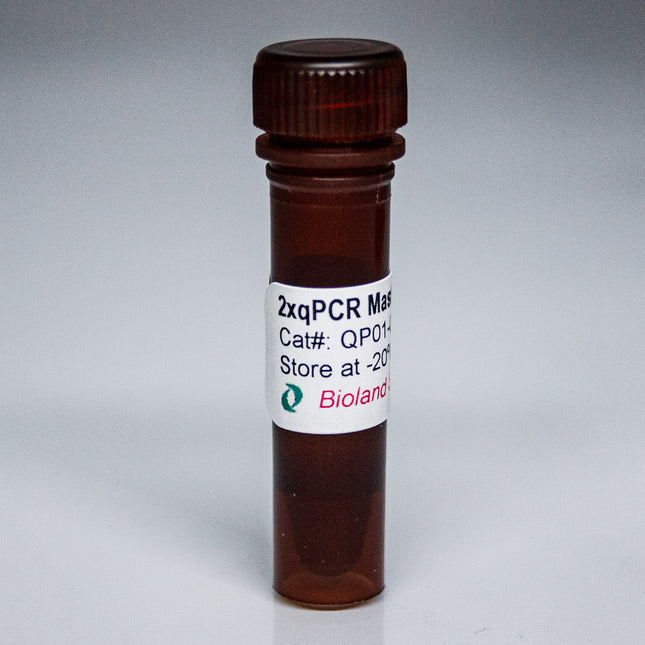
The kit is designed for multiplex qPCR with TaqMan probes.
The kit uses Super Taq-Probe DNA polymerase specially engineered for TaqMan probes, which increases 5’ to 3’ exonuclease efficiency and produces S-shaped curve.
Up to four pairs of gene-specific primers can be applied in one reaction.
The concentrations of the primers and probes are variable depending on specific assays and thermocycling protocols (Table 1).
The preferable PCR product size is ≤150bp.
The kit has three formulations of No ROX, Low ROX or High ROX concentrations for your choice (see Table 2).
Intended Use
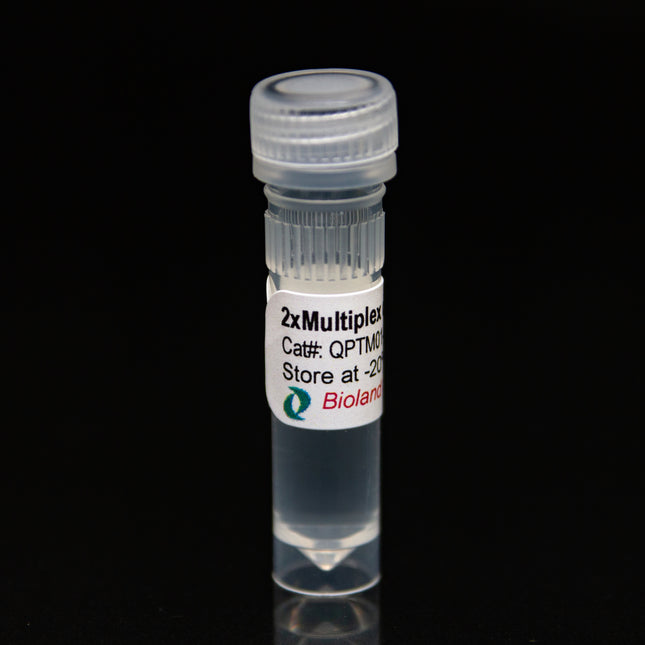
The 2x Multiplex qPCR Master Mix is used for real-time qualitative and quantitative multiplex qPCR with TaqMan probes for up to four targets.
The master mix is a premixed, 2X concentrated solution that has all the components except for gene-specific primers, probes and templates.
Transportation and storage
The kit can be transported at below 4°C for up to 3 days.
The kit should be kept stable in the dark at -20°C for ≤24 months with ≤10 times of freeze-thaw cycles. The kit can be stored at 4°C for a week.
Setup Reaction and Thermocycling
Thaw 2x Master mix and other reaction components at room temperature, mix each component, centrifuge and then place on ice.
Set up reactions (Table 1).
Seal tubes with flat, optically transparent caps or seal plate with optically transparent film.
Mix and then briefly centrifuge the tubes or plate.
Program PCR instrument with indicated thermo-cycling protocol.
Load PCR tubes or plate and start to run.
Perform data analysis according to the PCR instrument instructions.
Table 1. Setting up a 20μl or 10μl Reaction
Component
Volume per 20μl
Volume per 10μl
Final Concentration
2x Mastermix
10μL
5μL
1X
Primersa
Variable
Variable
Each 150-400nM
TaqMan probesb
Variable
Variable
Each 150-250nM
DNA Templatec
Variable
Variable
≤500ng human genomic DNA/20μL
H2O
To 20μL
To 10μL
Note:
Each primer’s Tm should be designed ≥60°C, preferably between 62°C to 65°C, using primer3 software for high efficiency and specificity.
Each probe’s Tm should be 8-10°C higher than the primer’s Tm, preferably between 70-75°C.
DNA templates should be extracted by a qualified silica-based kit and eluted with low EDTA TE buffer (10mM Tris-HCl, 0.1mM EDTA, pH 8.0-8.3).
Table 2. Standard Thermocycling Protocol
Stage
Temperature
Period
Number of Cycles
I
95°C
2 min
1
II
95°C
10 sec
35-40
II
60°C, signal acquisition
60 sec
35-40
Table 3. Three-Step Thermocycling Protocol
Stage
Temperature
Period
Number of Cycles
I
95°C
1 min
1
II
95°C
10 sec
35-40
II
60°C
30 sec
35-40
II
68-72°C, signal acquisition
30 sec
35-40
Notes:
The three-step thermocycling protocol in Table 4 increases overall polymerase activity by 50%, a more effective protocol than Table 3.
The primer concentration used in Tables 3 and 4 is typically 0.15-0.2uM.
Precautions
If you order a “No ROX” master mix but you have an Applied Biosystems or Thermo Fisher instrument, please turn off ROX passive reference dye button when setup assays.
Table 4. Compatible Instruments
qPCR Instrument
ROX required by instrument
Passive dye setup
Bio-Rad® iQ™5, CFX96, CFX384, Opticon Roche Lightcycler®Qiagen Rotor-Gene™Eppendorf Mastercycler®Cepheid® SmartCycler®
Not recommended
Not necessary
Applied Biosystems® 7500, 7500 Fast, QuantStudio™, ViiA7™, Agilent Mx™
Low ROX(50nM final concentration)
Turn on ROX passive reference dye
Applied Biosystems® 5700, 7000, 7300, 7700, 7900, 7900HT, 7900HT Fast, StepOne™, StepOnePlus™
High ROX(500nM final concentration)
Turn on ROX passive reference dye
SYBR Green I-based qPCR reagent:
It contains PowerPCR™ Hot Start Taq DNA polymerase, PCR buffer, dNTPs, SYBR Green I fluorescent dyes, Mg2+ and ROX calibration dye.
It can be applied to the target sequence detection of genomic DNA and cDNA. The SYBR Green I dye binds to dsDNA without using sequence-specific probes.
The chemically modified PowerPCR™ Hot Start Taq DNA polymerase is inactive at room temperature which effectively avoids the non-specific amplification caused by primer dimers or the nonspecific binding of prime and template. The enzyme should be activated by incubation at 95°C for 10 minutes.
The unique PCR buffer components and the Hot start enzyme ensure PCR specificity and sensitivity.
The ROX is a dye molecule that can be used to normalize the well-to-well fluorescent fluctuations and can be applied to all qPCR instruments using ROX as calibration dye.
It has a higher sensitivity and a wider linear range which can exactly quantitate the target gene or low copy template.
Suitable Real-Time PCR detection systems:
ABI Prism7000/7300/7700/7900
ABI Step One/StepOne Plus
Eppendorf
systems need high ROX signals
SYBR Green I-based qPCR reagent:
It contains PowerPCR™ Hot Start Taq DNA polymerase, PCR buffer, dNTPs, SYBR Green I fluorescent dyes, Mg2+ and ROX calibration dye.
It can be applied to the target sequence detection of genomic DNA and cDNA. The SYBR Green I dye binds to dsDNA without using sequence-specific probes.
The chemically modified PowerPCR™ Hot Start Taq DNA polymerase is inactive at room temperature which effectively avoids the non-specific amplification caused by primer dimers or the nonspecific binding of prime and template. The enzyme should be activated by incubation at 95°C for 10 minutes.
The unique PCR buffer components and the Hot start enzyme ensure PCR specificity and sensitivity.
The ROX is a dye molecule that can be used to normalize the well-to-well fluorescent fluctuations and can be applied to all qPCR instruments using ROX as calibration dye.
It has a higher sensitivity and a wider linear range which can exactly quantitate the target gene or low copy template.
Suitable Real Time PCR Detection Systems
ABI Prism 7500/7500 Fast
Strategene MX3000/MX3005P
Corbett Rotor Gene 3000
Systems need low ROX signals
SYBR Green I-based qPCR reagent:
It contains PowerPCR™ Hot Start Taq DNA polymerase, PCR buffer, dNTPs, SYBR Green I fluorescent dyes and Mg2+.
It can be applied to the target sequence detection of genomic DNA and cDNA. The SYBR Green I dye binds to double-stranded (ds) DNA without using sequence-specific probes.
The chemically modified PowerPCR™ Hot Start Taq DNA polymerase is inactive at room temperature which effectively avoids the nonspecific amplification caused by primer dimers or the nonspecific binding of prime and template. The enzyme should be activated by incubation at 95°C for 10 minutes.
The unique PCR buffer components and the hot start enzyme ensure PCR specificity and sensitivity.
It has a higher sensitivity and a wider linear range which can exactly quantitate the target gene or the low copy template.
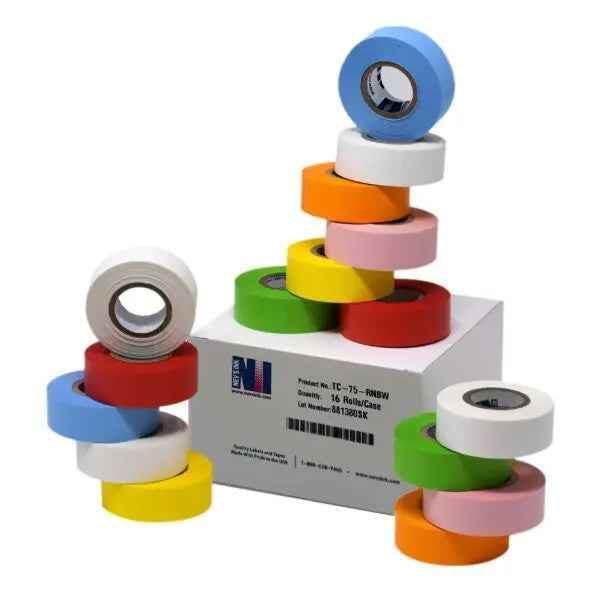
The paper tapes are ideal for general laboratory use, and is excellent for applications in refrigeration.
Sticks to virtually any surface.
Can be written on with pencil, fiber-tip or ball point pen, and lab markers.
Can withstand temperatures from -23 to 121°C (-10 to 250°F) and has an application temperature as low as 0°C (32°F).
Vinyl-coated, soft satin-finish
The adhesive backing will peel off easily and leaves no residue
Rainbow packs contain blue, green, orange, pink, red, yellow, and white tape.
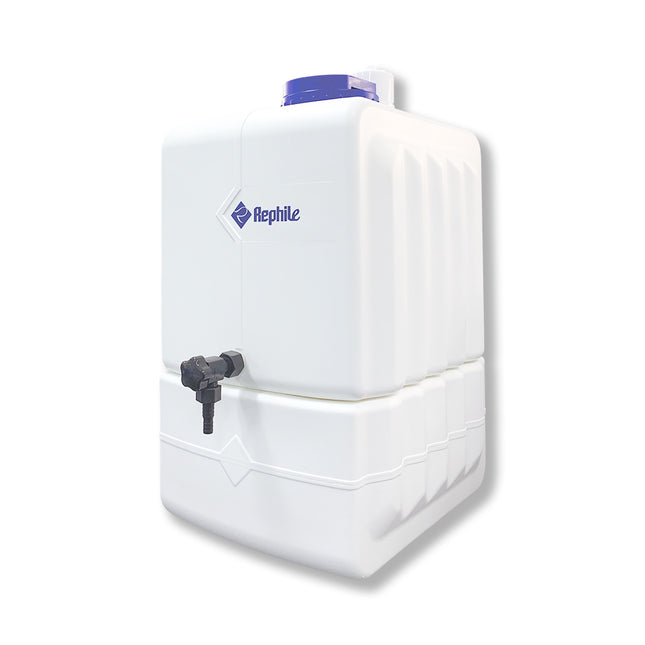
30 Liter PE Tank RATK030L0 is designed to protect the quality of purified water based on the best proven technology & designs.
Features:
High purity inert HDPE material. HDPE has the little branching making the tank is low extractable and has smooth surface.
Opaque construction and smooth inner surface to minimize biofilm formation and algal growth.
No dead volume thanks to cylindrical shape and conical bottom design. Easy in emptying and cleaning.
Threaded lid for airtight closure, preventing air from entering inside the tank.
A vent filter to guard the water tank against particles and microbes from atmosphere.
Continuous liquid level sensor for exact measurement of water level at any point.
Overflow sensor managed by control console. Convenient and worry-free.
Suitable for Genie water systems:
Genie G
Genie U
Genie E
Genie R
Genie PURIST (Optional)
Dimensions:
Length
420 mm
Depth
340 mm
Height
580 mm
Volume
30 L
Applications:
Suitable for product packaging and storage requirements in molecular biology and cell biology, laboratory medicine, genomics, proteomics, and other areas.
Product Features
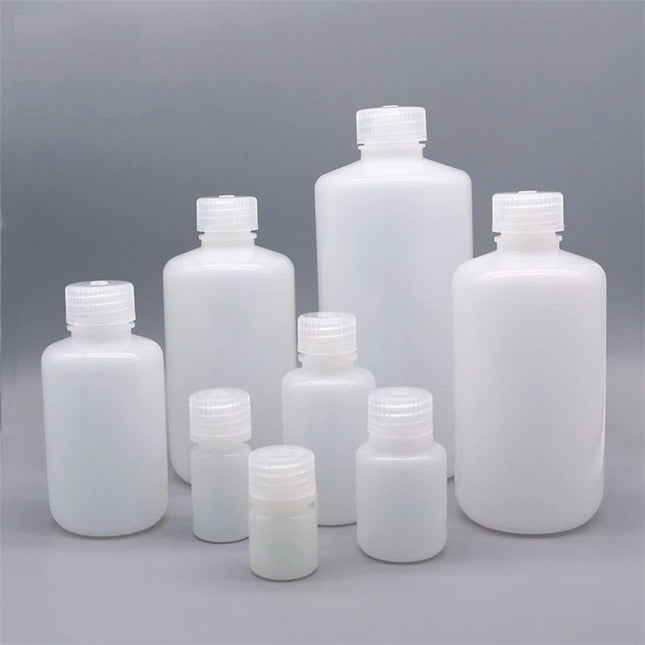
The raw materials, premium polypropylene (PP, cap)/polyethylene (HDPE, bottle), have excellent physical and chemical indicators and very good pressure-resistance, impact-resistance and acid and alkali resistance.
PP materials can undergo autoclave sterilization at 121°C; HDPE can be stored at -80°C.
A full range of choices to meet different packaging and storage requirements.
Wash-free, no need for tedious pre-cleaning processing work, ready to use, greatly improves the packaging effect of users.
Thickened middle packaging to ensure transportation and storage safety.
Use of professional leak-proof design for bottle mouth, with no need for inner cover or inner gasket for protection, excellent sealability.
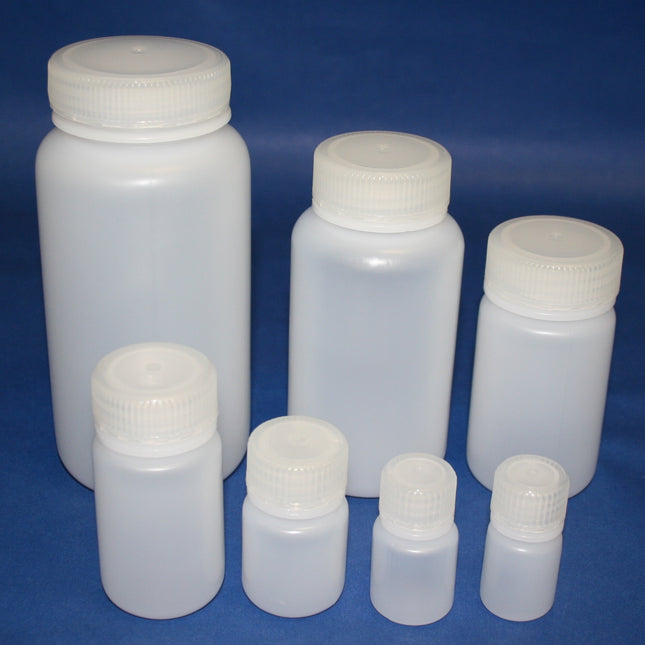
100% leak-proof to ensure safety even during air transportation; wide-mouthed design for easy access of liquid.
No biotoxicity, pyrogen-free, DNase/RNase-free, manufactured in a 100-thousand grade clean plant.
Sterilized using GAMMA-ray.
Introduction of imported digital-controlled production equipment with high precision
Fine details and comfortable touch
Bottle walls are even with high gloss, with no color difference; high uniformity between different batches.
The PP bottles are for general laboratory use, ideal for lab specimens, chemicals and buffers.
Features:
Excellent chemical resistance to alcohols, alkalis and acids
Autoclavable
Can be stored in -40°C freezer
Durable
Leakproof design
Polypropylene caps included
SKU
Capacity
Diameter x Height
Cap Size
BO3W10-10 BO3W10-100 BO3W10-1000
10 ml (0.3 fl oz)
23 x 48 mm
22 mm
BO3W15-10BO3W15-100BO3W15-1000
15 ml (0.5 fl oz)
27 x 48 mm
22 mm
BO3W30-10BO3W30-100BO3W30-800
30 ml (1.0 fl oz)
34 x 58 mm
31 mm
BO3W60-10BO3W60-100BO3W60-400
60 ml (2.0 fl oz)
40 x 82 mm
37 mm
BO3W125-10BO3W125-100BO3W125-250
125 ml (4.2 fl oz)
49 x 98 mm
43 mm
BO3W250-10BO3W250-150
250 ml (8.5 fl oz)
60 x 128 mm
43 mm
BO3W500-10BO3W500-120
500 ml (16.9 fl oz)
73 x 158 mm
56 mm
Applications:
Suitable for product packaging and storage requirements in molecular biology and cell biology, laboratory medicine, genomics and proteomics and other areas.
Product Features
The raw materials, premium polypropylene (PP)/polyethylene (HDPE), have excellent physical and chemical indicators, pressure-resistance, impact-resistance, and acid and alkali resistance.
PP materials can undergo autoclave sterilization at 121°C ; HDPE can be stored at -80°C.
Pre-washed/Ready-to-use: no need for tedious pre-cleaning
Thickened middle packaging to ensure transportation and storage safety.
Use of professional leak-proof design for bottle mouth, with no need for inner cover or inner gasket for protection, excellent sealability.
100% leak-proof to ensure safety even during air transportation; wide-mouthed design for easy access of liquid.
No biotoxicity, pyrogen-free, DNAse/RNAse-free, manufactured in a 100-thousand grade clean plant.
Sterilized using GAMMA-ray
Using automated production equipment, the bottles have fine details and evenly glossed walls. In addition, batches are incredibly uniform
By using high-grade molding and surface processing technologies, the bottles feature smooth interior and exterior surfaces that prevent the wicking effect of reagents, thereby significantly reducing sample wastage
Applications:
Suitable for product packaging and storage requirements in molecular biology and cell biology, laboratory medicine, genomics and proteomics and other areas.
Product Features
The raw materials, premium polypropylene (PP)/polyethylene (HDPE), have excellent physical and chemical indicators, pressure-resistance, impact-resistance, and acid and alkali resistance.
PP materials can undergo autoclave sterilization at 121°C; HDPE can be stored at -80°C.
Pre-washed/Ready-to-use: no need for tedious pre-cleaning
Thickened middle packaging to ensure transportation and storage safety.
Use of professional leak-proof design for bottle mouth, with no need for inner cover or inner gasket for protection, excellent sealability.
100% leak-proof to ensure safety even during air transportation; wide-mouthed design for easy access of liquid.
No biotoxicity, pyrogen-free, DNAse/RNAse-free, manufactured in a 100-thousand grade clean plant.
Sterilized using GAMMA-ray.
Using automated production equipment, the bottles have fine details and evenly glossed walls. In addition, batches are incredibly uniform.
By using high-grade molding and surface processing technologies, the bottles feature smooth interior and exterior surfaces that prevent the wicking effect of reagents, thereby significantly reducing sample wastage
SKU
Volume (ml)
Material
Color
Bottles per Bag
Total Bottles
336101
15
HDPE
Natural
20
400
337101
30
HDPE
Natural
10
200
338101
60
HDPE
Natural
10
200
339101
125
HDPE
Natural
10
100
340101
250
HDPE
Natural
10
100
341101
500
HDPE
Natural
5
50